Services Offered
In Hospital Physiotherapy
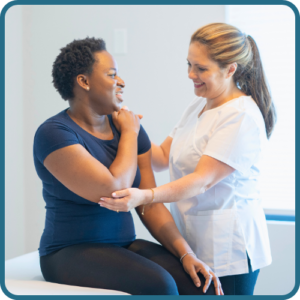
The medical doctors instruct the physiotherapists to carry out treatment for patients in the wards of Constantiaberg Mediclinic. Once discharged, the patient is welcome to continue treatment with us as an out-patient. We see patients for vestibular, chest conditions and mobilisation.
Out Patient / Individual Physiotherapy
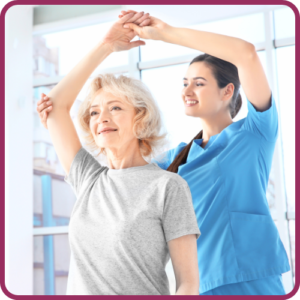
Patients may schedule an appointment with a physiotherapist working in the practice, either referred by a medical doctor or directly with the practice. The injury needing treatment is assessed by taking a comprehensive history and establishing the diagnosis with selected tests. Based on the outcomes, a treatment plan is designed and is structured to suit the patient’s specific needs.
Shockwave Therapy
What is Shockwave Therapy?
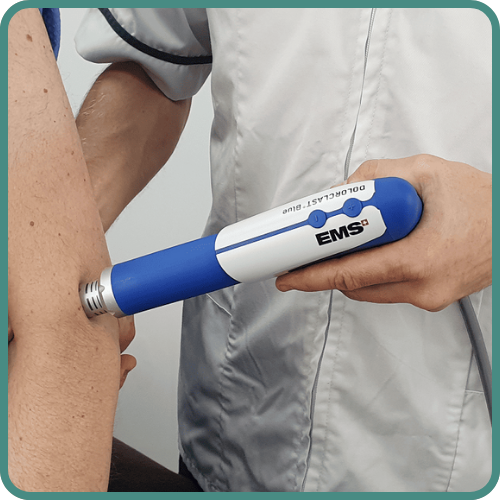
Shockwave therapy is a non-invasive treatment that activates the body’s natural healing process. It helps relieve pain and supports the recovery of injured tendons, ligaments, and soft tissues. This therapy is particularly effective for conditions like tendinopathy, ligament injuries, and even post-surgery recovery. In some cases, focused shock waves can break down calcium deposits in tendons, aiding in healing.
How Does It Work?
Shockwaves stimulate blood flow and growth hormones, encouraging new tissue growth. There are two types of therapy:
- Focused Shockwave Therapy: Targets a specific area for precise treatment.
- Radial Shockwave Therapy: Covers a broader area, ideal for longer injuries like tendons.
Most patients undergo 3-5 sessions over several weeks, depending on the injury.
What Does It Treat?
Shockwave therapy is commonly used for:
- Foot pain: Plantar fasciitis, Achilles tendinopathy
- Knee pain: Jumper’s knee (patella tendinopathy)
- Leg pain: Hamstring injuries
- Hip pain: Gluteal tendinopathy, lateral hip pain
- Elbow pain: Golfer’s and tennis elbow
- Shoulder pain: Rotator cuff injuries
- Bone injuries: Shin splints, stress fractures, non-union fractures
Recovery and Effectiveness
Most people can resume activity within 24 hours of treatment. Results take time, as the tissue heals gradually. Shockwave therapy often works best alongside other treatments.
Side Effects and Safety
Side effects are rare but a physiotherapist will assess your condition before starting treatment to ensure it’s safe and suitable for you.
The device sends shockwaves into the injured tissue, stimulating increased blood flow and growth hormones to the area, promoting new tissue growth.
There are two types of shockwave therapy. Usually, patients receive both types:
- Focused shockwave therapy sends shock waves into the small area.
- Radical shockwave therapy delivers shockwave over a broader area, for instance, along the length of an injured tendon.
Depending on the injury, a patient will usually receive 3-5 treatments over a period of several weeks.
Classes Offered
Classes are conducted by professional physiotherapists. Speak to us about recommending a class best suited to your needs. Participating in an exercise class improves strength, endurance, flexibility, coordination, cardiovascular fitness, and balance. Distinct benefits are for better health and functional capacity, reducing the risk of falls, and managing chronic disease. We recommend at least 150 minutes of moderate-intensity aerobic activity of 75 minutes of vigorous-intensity aerobic activity, at least two days of muscle-strengthening and balance activities per week.
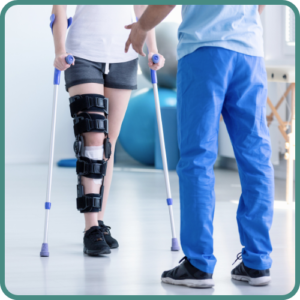
Functional Post-Operative Joint Replacement Rehabilitation
The goal is to improve general body strength, fitness, and functional ability for recovery from lower limb surgery or injuries. classes bridge the post-operative period, where you may have physical limitations, to confidently achieve personal goals. The class members participate in a range of prescribed exercises, using tools such as balance mats, weights, elastic bands, and bicycles.
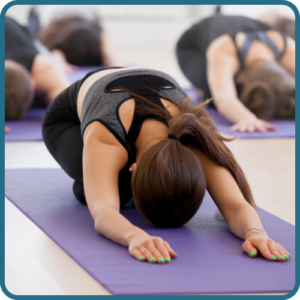
Pilates
Your body is designed to move smoothly and easily, and Pilates can help to maintain that ease. Pilates strengthens your core muscles and incorporates deep breathing techniques. The focus is on the correct form, while you determine the intensity, and every movement is adjusted to suit your individual needs.
Monday
7: 30 – 8:15 PILATES -Beginner and Intermediate
8:15 – 9:00 PILATES – Intermediate
9: 00 – 9:45 PILATES -Beginner
17:15 – 18:00 PILATES -Beginner and Intermediate
18:00 – 18:45 PILATES – Advanced
Tuesday
15: 00 – 15:45 PILATES -Beginner
17:15 – 18:00 PILATES – Beginner and Intermediate
Wednesday
NO CLASSES
Thursday
9: 00 – 9:45 PILATES – Intermediate
Friday
7: 30 – 8:15 PILATES – Beginner
10:30 – 11:15 – JOINT REHAB CLASS
Conditions treated:
Technique selection is tailored to address an individual patient’s symptoms such as weakness, pain or loss of function. Hands-on therapy, exercises, dry needling, electrotherapy, and taping to support structures are considered. Stages of healing determine which technique is suitable and dosage.
Biomechanical Imbalances
Muscular imbalances occur when a muscle becomes stronger or weaker than it’s opposing muscle, or the
alignment of a joint or a limb changes. Examples include patellofemoral pain, or a change in the alignment of
the pelvis results in lower back or lower limb (hip, knee, ankle) symptoms.
Chest Related Treatment
Includes chest infections, bronchitis, pneumonia, asthma, and COPD.
Chronic Pain Management
Increased sensitivity of the neural system, fibromyalgia and persisting pain that limits daily function.
Ergonomic Advice
Improving work postures and positions to reduce strain on joints such as neck and back, and muscles in the body.
Joint Related Treatment
Fractures, sprains, or overuse injuries of various joints as the shoulders, knee, ankles, patellofemoral, etc.
Nerve Related Conditions
Neural irritation or compression, and conditions such as carpal tunnel syndrome and nerve pain from the
neck.
Post-Surgical Recovery
Includes surgeries: spinal (discectomies, fusions, etc), shoulders (acromioplasties, rotator cuff repair, etc), hips (labral repair, etc), ankles (achilles reconstruction, internal fixation, post fractures) and after joint
replacement.
Sinus Related Conditions
Includes sinus surgeries and sinusitis.
Spinal Conditions
Neck, mid or lower back symptoms with varied related discogenic, joint, sciatica conditions, etc.
TMJ Dysfunction Treatment
Symptoms from the jaw such as clicking, locking, and chewing difficulties, often associated with ear pain, blocked ear feeling and headaches.
Tendon, Muscle and Ligaments
Muscle tears, muscle tendinopathy or tendinitis, strains due to trauma or overuse.
Vestibular Rehabilitation
Dizziness vertigo, reduced balance, and treatment of Benign Paroxysmal Positional Vertigo (BPPV). Vestibular
Rehabilitation Therapy co-ordinates the information from the inner ear balance organs, vision, neck, and feet
proprioceptive systems to improve the postural control system.