Persistent pain can be exhausting, especially when it keeps coming back despite rest and self-management. If you are dealing with heel pain, Achilles tendon pain, tennis elbow or a stubborn soft tissue condition, shockwave therapy may help. At Gray Physiotherapists and Associate, a registered physiotherapy practice in Constantia, Cape Town, we use shockwave therapy as part of an evidence-based treatment approach. Together, this helps relieve pain, improve tissue healing and support better movement.
What Is Shockwave Therapy?
Shockwave therapy is a non-invasive treatment that uses acoustic pressure waves to stimulate the body’s natural healing response in tendons, ligaments and soft tissue. In particular, physiotherapists use it for injuries that are persistent or slow to recover.
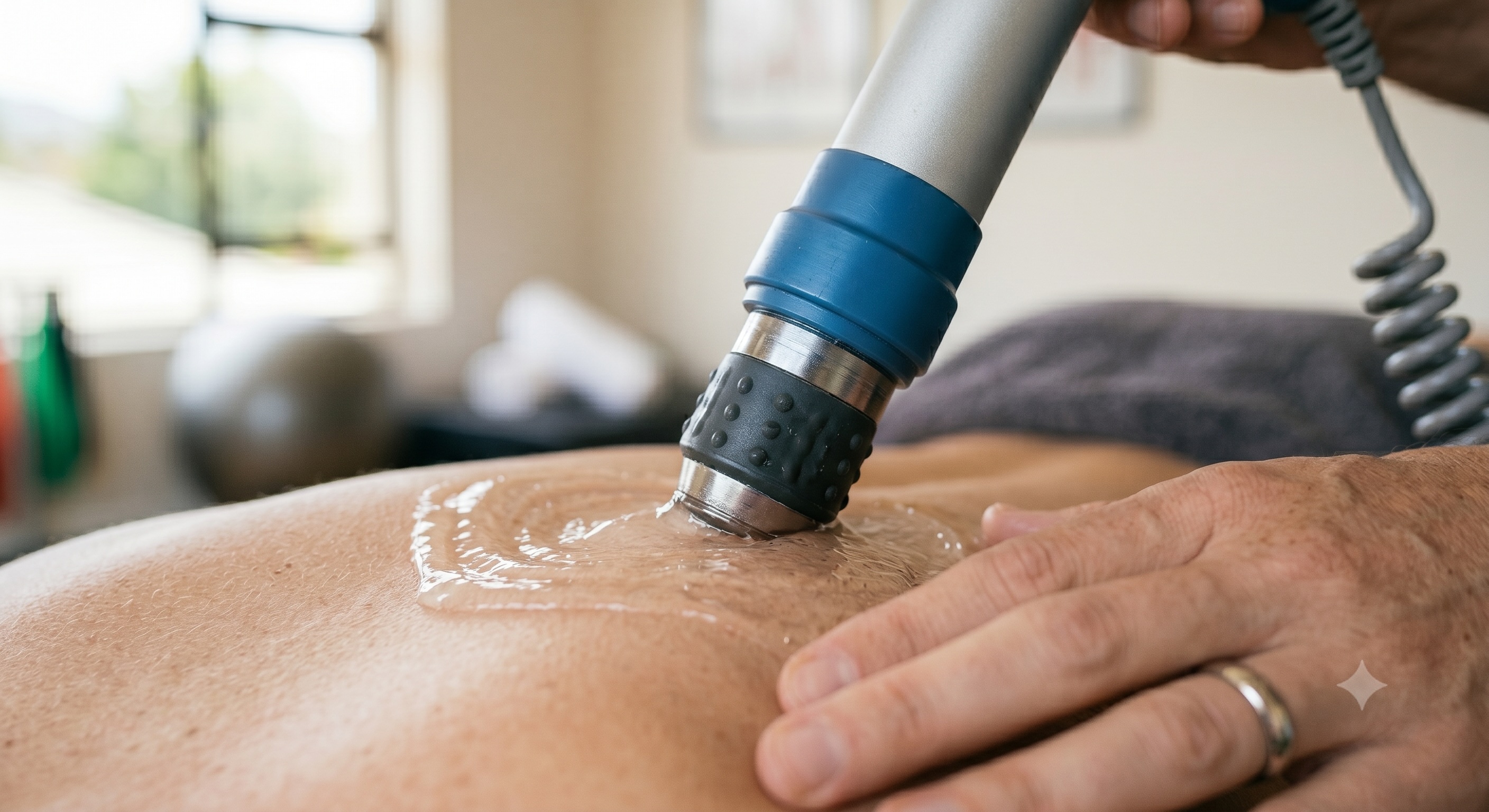
Your physiotherapist delivers the treatment through a handheld device placed on the skin over the affected area. These pressure waves help stimulate blood flow, encourage tissue repair and support recovery in painful or injured areas.
Shockwave therapy does not involve surgery, injections or medication. Instead, we use it alongside a broader physiotherapy treatment plan. This may include rehabilitation exercises, hands-on treatment, movement correction and advice on returning to activity safely.
How Does Shockwave Therapy Work?
Shockwave therapy works by sending controlled pressure waves into the affected tissue. This stimulates circulation and activates a healing response in the body.
In practical terms, shockwave therapy can help wake up tissue that has become irritated, overloaded or slow to heal. It may also help reduce pain sensitivity, making it easier to move, exercise and progress with rehabilitation.
At Gray Physiotherapists and Associate, we may include shockwave therapy in a structured physiotherapy plan. The approach depends on your condition, symptoms and recovery goals.
What Conditions Can Shockwave Therapy Help Treat?
We often use shockwave therapy for ongoing tendon, ligament and soft tissue pain. If pain has not settled with rest or basic home management, shockwave therapy may help.
Common conditions we treat with shockwave therapy at Gray Physiotherapists include:
Plantar Fasciitis and Heel Pain
Plantar fasciitis is one of the most common causes of heel pain. It often causes sharp pain under the heel. This is especially noticeable with the first few steps of the day or after sitting for a while.
Shockwave therapy may help stimulate healing in the plantar fascia, reduce pain and support better foot function.
Achilles Tendon Pain
Achilles tendon pain can affect runners, walkers and active people. In addition, it can develop from everyday overload. Symptoms may include stiffness, tenderness or pain at the back of the heel or lower calf.
We may use shockwave therapy to support tendon healing. As a result, ongoing Achilles pain can reduce as part of a wider rehabilitation programme.
Tennis Elbow and Golfer’s Elbow
Tennis elbow and golfer’s elbow are common overuse injuries that affect the tendons around the elbow. Despite the names, you do not need to play sport to develop them. Repetitive gripping, lifting, typing or manual work can all contribute.
Shockwave therapy may help reduce tendon pain and support recovery when elbow pain has become persistent.
Shoulder Pain and Rotator Cuff Tendinopathy
Shoulder pain can affect sleep, work, exercise and daily tasks like reaching, dressing or lifting. In some cases, rotator cuff tendinopathy or calcific changes in the shoulder tendons contribute to the pain.
Shockwave therapy may help stimulate healing in the affected tissue and support improved shoulder function.
Patellar Tendinopathy
Patellar tendinopathy, often called jumper’s knee, causes pain around the front of the knee, usually just below the kneecap. It is common in people who run, jump, train or place repeated load through the knee.
Shockwave therapy may form part of a treatment plan to help reduce pain and improve load tolerance.
Soft Tissue and Overuse Injuries
Shockwave therapy also helps with other persistent soft tissue injuries, especially where pain has not improved with rest alone.
These may include chronic tendon pain, repetitive strain injuries, ligament irritation and certain sports-related injuries.
Benefits of Shockwave Therapy
As a non-invasive option, shockwave therapy supports the body’s natural healing process without surgery or injections.
Key benefits may include:
- Non-invasive treatment with no surgery or injections required
- Supports blood flow and tissue repair
- May help reduce persistent tendon and soft tissue pain
- Can form part of a physiotherapy rehabilitation plan
- May help improve movement, function and return to activity
- Often suitable for chronic or recurring injuries
Is Shockwave Therapy Painful?
Treatment can feel uncomfortable, especially over painful or sensitive tissue. Most people describe it as a strong tapping or pulsing sensation.
Your physiotherapist can adjust the intensity according to your comfort level. Some tenderness after treatment is possible, but this usually settles within a day or two.
Your physiotherapist will guide you through what to expect and make sure the treatment suits your condition.
How Many Shockwave Therapy Sessions Will I Need?
The number of sessions depends on your injury, how long you have had symptoms and your body’s response to treatment. In general, many patients complete a short course of sessions over several weeks. Your physiotherapist will then recommend a plan based on your specific needs.
What Happens After Shockwave Therapy?
After shockwave therapy, your physiotherapist may advise you to avoid heavy exercise or aggravating activity for a short period. This gives the treated tissue time to respond.
Shockwave therapy works best when you combine it with a full rehabilitation plan. This may include:
- Strengthening exercises
- Mobility work
- Load management
- Posture and movement correction
- Gradual return-to-sport or activity planning
- Advice on preventing the injury from returning
Shockwave therapy can support healing. However, long-term recovery usually depends on addressing the underlying reason the pain developed in the first place.
Is Shockwave Therapy Right for Me?
Shockwave therapy may suit you if you have ongoing pain that rest, stretching or standard treatment has not resolved. In particular, we may consider it for:
- Heel pain and plantar fasciitis
- Achilles tendon pain
- Tennis elbow and golfer’s elbow
- Shoulder tendon pain and rotator cuff tendinopathy
- Patellar tendinopathy
- Sports injuries and chronic soft tissue pain
- Recurring overuse injuries
As a first step, your physiotherapist will assess your condition and decide whether shockwave therapy is appropriate.
Shockwave Therapy in Constantia, Cape Town
If pain limits your movement, sport, work or daily routine, shockwave therapy may help. Gray Physiotherapists and Associate is a registered physiotherapy practice based at Mediclinic Constantiaberg in Plumstead, Cape Town. Our physiotherapists are registered with the Health Professions Council of South Africa (HPCSA) and treat pain, injury and rehabilitation using evidence-based methods. Shockwave therapy may form part of your treatment plan to help reduce pain, support healing and improve function.
Book Shockwave Therapy at Gray Physiotherapists
You do not have to keep pushing through persistent pain.
Book an appointment with Gray Physiotherapists and Associate in Constantia, Cape Town. Find out whether shockwave therapy is right for your recovery.
Call 021 797 1777 or book an appointment online.
Recent Comments