
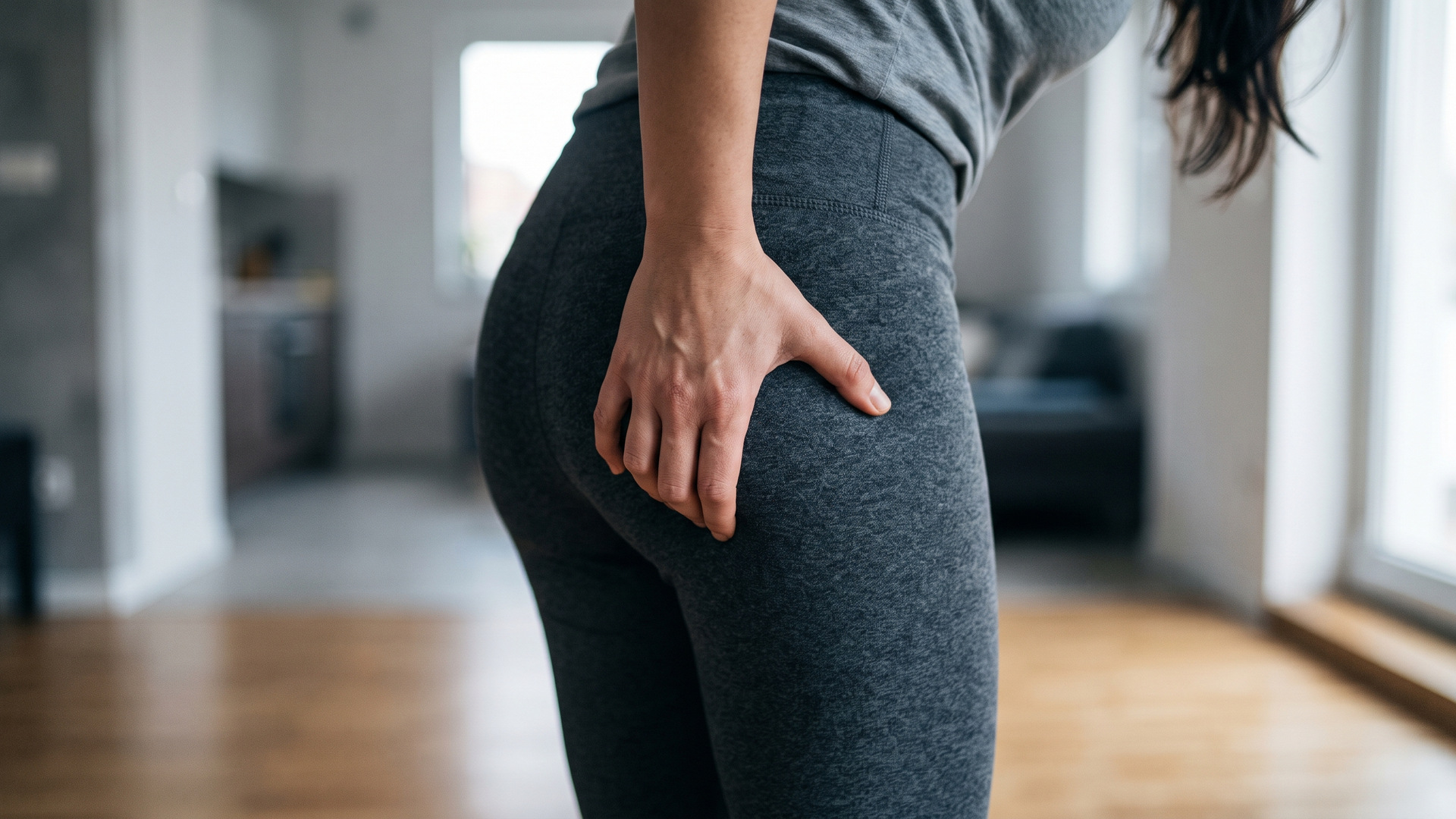
Gluteal Tendinopathy: Why Your Outer Hip Hurts and What Helps
Does your hip ache when you lie on your side at night? Perhaps climbing stairs, walking uphill or simply standing on one leg has become uncomfortable.
Pain on the outside of your hip can make surprisingly ordinary activities frustrating.
One possible cause is gluteal tendinopathy, a condition affecting the tendons that connect your gluteal muscles to the outside of your hip.
Although it can be persistent, gluteal tendinopathy can often be managed successfully with appropriate activity modification and progressive rehabilitation.
What is gluteal tendinopathy?
Your gluteal muscles play an important role in supporting and stabilising your hips during walking, running and everyday movement.
These muscles attach to your thigh bone through strong tendons.
Gluteal tendinopathy develops when these tendons become painful and less able to tolerate the demands placed on them.
It is a common contributor to lateral hip pain and can form part of a condition known as greater trochanteric pain syndrome (GTPS).
Importantly, not every case of outer hip pain is caused by gluteal tendinopathy. An accurate assessment can help identify the underlying problem.
What are the symptoms of gluteal tendinopathy?
Common symptoms include:
Pain or tenderness on the outside of the hip
Discomfort when lying on the affected side
Pain when climbing stairs or walking uphill
Increased symptoms during prolonged walking
Discomfort when standing on one leg
Pain following changes in exercise or activity levels
Symptoms may develop gradually and can fluctuate depending on your activity levels.
Why does gluteal tendinopathy develop?
Tendons are designed to tolerate load. However, problems can develop when the demands placed on them exceed their current capacity.
This may happen after increasing your walking distance, changing your exercise routine or repeatedly placing pressure on sensitive tendons.
Certain positions can also increase compression around the outside of your hip, contributing to discomfort.
That’s why the answer isn’t necessarily to stop moving altogether.
The aim is to identify which activities are aggravating your symptoms and find a level of movement your body can tolerate while you rebuild strength.
Why does your hip hurt when you sleep on your side?
Night-time hip pain is a common complaint among people with gluteal tendinopathy.
Lying directly on the affected hip can place additional compression through the sensitive tendons.
Certain positions may also increase pressure around the outside of the opposite hip.
Adjusting your sleeping position, including using pillows for support where appropriate, may help reduce discomfort.
Your physiotherapist can advise which positions are suitable for your symptoms.
Should you stretch a painful hip?
Not automatically.
Although stretching might seem like the obvious solution when your hip feels tight, some stretches can increase compression through already sensitive gluteal tendons.
This may aggravate symptoms rather than improve them.
The correct approach depends on your assessment, the positions that trigger your pain and the current capacity of your muscles and tendons.
How does physiotherapy help gluteal tendinopathy?
At Gray Physiotherapy in Constantia, rehabilitation focuses on understanding your symptoms, identifying aggravating activities and gradually improving your body’s ability to tolerate load.
Treatment may include:
Activity modification
Temporarily adjusting movements or activities that place excessive demands on your hip.
Education and load management
Helping you understand which activities may aggravate symptoms and how to remain active without repeatedly overloading the tendon.
Progressive strengthening
Gradually increasing the strength and capacity of your gluteal muscles and tendons.
Functional rehabilitation
Progressing towards the everyday activities, walking distances or sporting demands you want to return to.
The goal isn’t simply to settle the pain. It’s to improve your hip’s ability to manage the activities that matter to you.
How long does gluteal tendinopathy take to improve?
Recovery varies depending on how long symptoms have been present, their severity and your usual activity levels.
Tendons often require gradual, consistent loading over time to improve their capacity.
Progress isn’t always perfectly linear. Some activities may feel comfortable before others.
An individualised rehabilitation programme can help you manage symptoms while progressively rebuilding strength.
Frequently asked questions about gluteal tendinopathy
Should I stop walking or exercising?
Usually not completely. Depending on your symptoms, temporarily reducing or changing certain activities may be more appropriate than prolonged rest.
Can strengthening make gluteal tendinopathy worse?
Exercise needs to be appropriately dosed. Too much loading too soon may aggravate symptoms, while progressive strengthening can help improve tendon capacity.
Is gluteal tendinopathy the same as bursitis?
Not exactly. Outer hip pain may involve the gluteal tendons, bursae or other structures. These conditions can overlap, which is why identifying the source of symptoms is important.
Can gluteal tendinopathy cause pain at night?
Yes. Side-lying positions can increase compression around the outside of the hip, which may contribute to night-time discomfort.
Don’t let hip pain control your movement
Gluteal tendinopathy doesn’t necessarily mean you need more rest.
Often, the key is finding the right amount of activity, reducing aggravating loads and gradually restoring strength.
Experiencing persistent outer hip pain?
At Gray Physiotherapy, based at Mediclinic Constantiaberg, we provide individualised assessment and rehabilitation to help you move more comfortably and confidently.
Call 021 797 1777 to book your physiotherapy assessment.
Recent Comments