
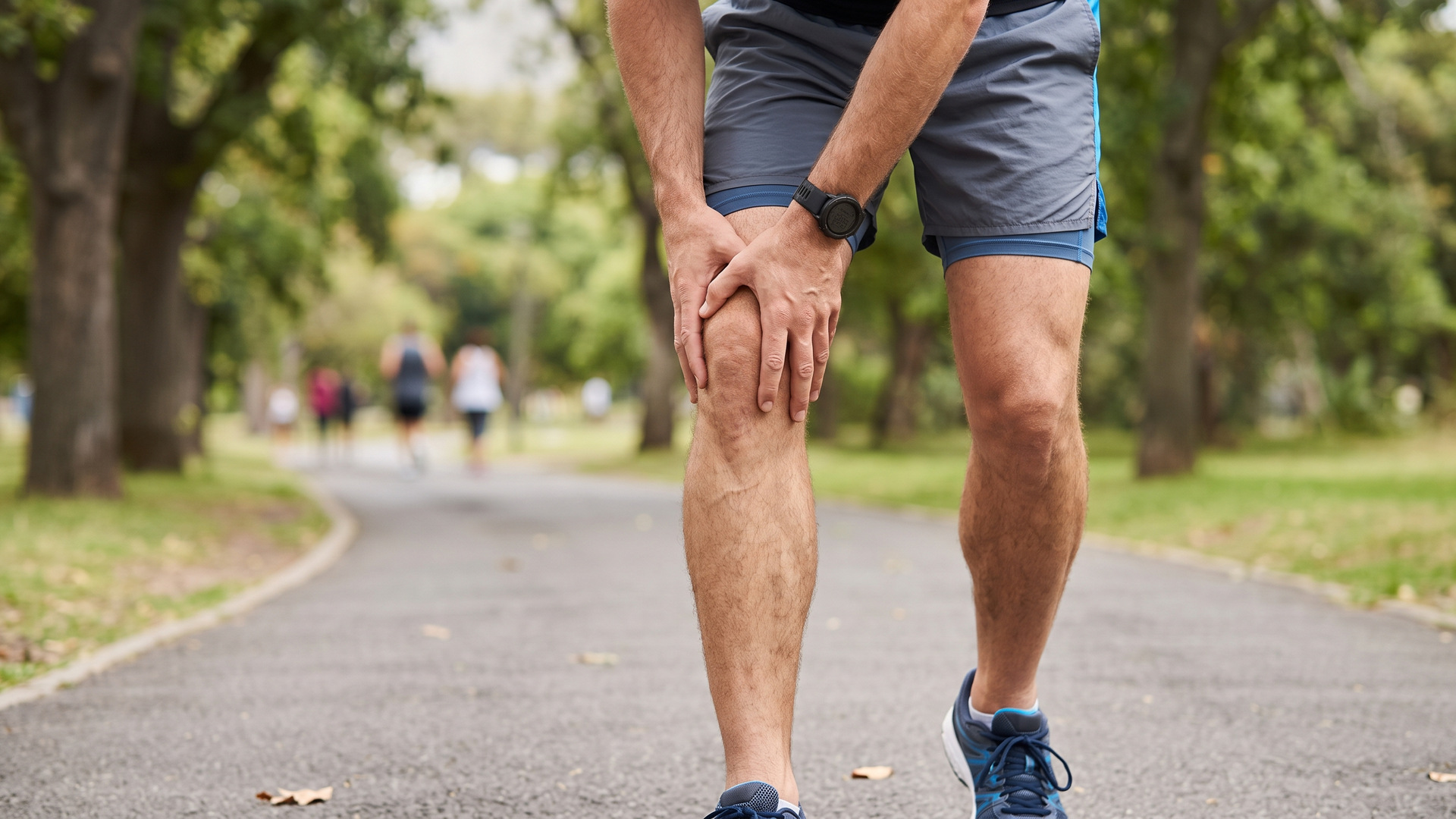
Runner’s Knee: Why Your Knee Hurts When Running and What Helps
Running should make you feel stronger, fitter and more energised. Not leave you worrying about every step because your knee hurts.
But if you’ve experienced knee pain while running, you’ll know how quickly it can affect your confidence.
One common cause is runner’s knee, also known as patellofemoral pain.
It typically causes discomfort around or behind the kneecap, particularly during activities that place repeated demands on the knee.
Here’s the important part: knee pain doesn’t automatically mean you’re damaging your knee or that you need to give up running.
Understanding why the pain has developed is key to managing it effectively.
What is runner’s knee?
Runner’s knee is a commonly used term for patellofemoral pain.
It describes pain experienced around or behind the kneecap, often during activities that involve bending and loading the knee.
Although it’s frequently associated with running, it can also affect people during everyday activities.
What are the symptoms of runner’s knee?
Common symptoms include:
Pain around or behind the kneecap
Discomfort during or after running
Pain when walking up or down stairs
Difficulty with squatting
Pain during lunges
Discomfort after sitting with your knee bent for a prolonged period
The severity and timing of symptoms can vary.
Some runners experience discomfort early in a run, while others notice symptoms afterwards or during activities such as walking down stairs.
What causes runner’s knee?
There is rarely one single cause of patellofemoral pain.
Instead, symptoms may develop when the demands placed on the knee exceed its current ability to tolerate those loads.
Several factors may contribute.
Changes in training load
Increasing running distance, speed, frequency or hill training too quickly may place greater demands on the knee.
Muscle strength
The strength and capacity of the quadriceps and hip muscles can influence how the lower body manages running demands.
Movement and running patterns
Individual movement characteristics may contribute to symptoms in some runners.
Previous injuries
Your injury history can influence how your body responds to changes in training.
The important point is that everyone’s situation is different. Effective treatment starts with understanding your specific contributing factors.
Should you stop running if your knee hurts?
Not necessarily.
For many runners, completely stopping all activity isn’t required.
A better approach may be to temporarily adjust your training while symptoms settle and strength improves.
This might involve changing:
Running distance
Weekly frequency
Running speed
Hill training
Terrain
Overall training intensity
The objective is to find a manageable level of running while gradually improving your body’s capacity.
However, not every type of knee pain is runner’s knee. Sudden injury, substantial swelling, inability to bear weight or a locked knee warrants prompt medical assessment.
How can physiotherapy help runner’s knee?
At Gray Physiotherapy in Constantia, we assess more than just the painful knee.
Your physiotherapist may look at your symptoms, training history, lower-body strength, movement patterns, previous injuries and running demands.
Where appropriate, your running technique may also be assessed.
This helps identify which factors are relevant to your symptoms and how your rehabilitation programme should be structured.
What exercises help runner’s knee?
Exercise is a key component of rehabilitation for patellofemoral pain.
Depending on your assessment, treatment may include:
Quadriceps strengthening
Building strength in the muscles at the front of your thigh to improve your knee’s ability to tolerate load.
Hip strengthening
Improving strength and control around the hips where these factors are relevant.
Progressive resistance exercises
Using equipment such as a leg press to gradually increase strength and loading capacity.
Functional strengthening
Progressing towards movements that reflect the demands of running.
Running retraining
Where appropriate, modifying specific aspects of running technique that may be contributing to symptoms.
The right exercises, resistance and progression will depend on your individual presentation.
The goal isn’t simply to make your knee feel better today. It’s to build a knee that can tolerate the running you want to do.
How long does runner’s knee take to recover?
Recovery varies between individuals.
Factors such as symptom duration, training load, strength and consistency with rehabilitation can influence progress.
Some runners may be able to continue modified running during rehabilitation, while others may need to reduce activity more substantially.
A structured programme helps you gradually work towards your running goals.
Frequently asked questions about runner’s knee
Does running with knee pain damage my knee?
Pain doesn’t automatically mean tissue damage is occurring. However, persistent or worsening symptoms should be assessed to help determine appropriate activity levels.
Do I need stronger glutes to fix runner’s knee?
Not necessarily. Hip strength may be relevant, but quadriceps strength, training load, movement and individual running demands can also play important roles.
Can changing my running technique help?
For some runners, yes. Running retraining may be useful when an assessment identifies a specific characteristic that could be modified.
Can I continue running while recovering?
Many runners can continue with an adjusted training programme. This depends on the nature and severity of symptoms and should be guided by individual assessment.
Don’t just recover. Build a knee that’s ready to run.
Runner’s knee doesn’t always mean the end of your training.
With appropriate load management, progressive strengthening and individualised rehabilitation, you can work towards running with greater confidence.
Is knee pain holding you back from running?
At Gray Physiotherapy, based at Mediclinic Constantiaberg, we help runners understand their symptoms and build the strength and capacity needed to return to the activities they enjoy.
Call 021 797 1777 to book your physiotherapy assessment.
Recent Comments